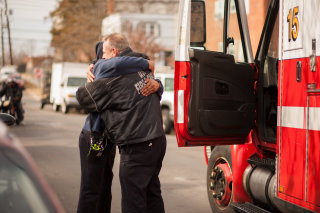
I set out to spend time with D.C. Fire and EMS Department's Engine 30 and Truck 9 to learn more about their daily lives and efforts.
The moment I stepped through the door of the firehouse and told the captain-- who was already climbing into the engine-- that I was the photographer for the ride-along that day. His first words were "I don't know what you're talking about, but you better get in." That high-paced energy is the standard for Engine 30. In 2016, they were ranked the 2nd busiest engine in the entire Nation-- taking on an astounding 7,690 runs in that time. Last year that number was 7,023.
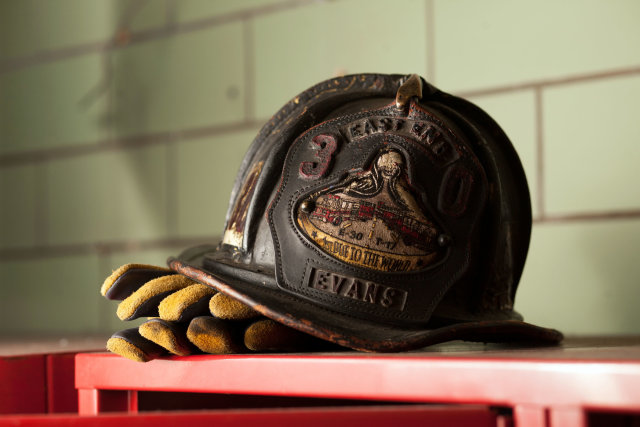
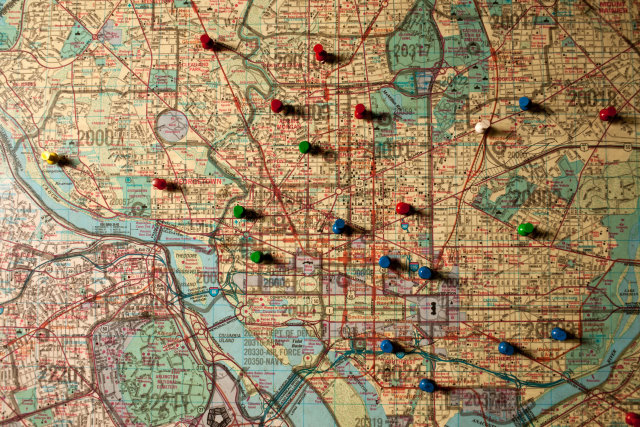
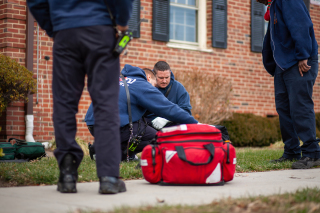
The first call they took was for a pregnancy. And many calls after that were for everything from overdoses to injuries. The DC Fire and EMS has made it a focus to make every firefighter an EMT-capable asset; nearly every single one has full qualifications and each fire station has its own ambulance. It is impressive to see that DC has created proficient medics in addition to capable firefighters. The former is a job of its own, let alone being just one aspect of their responsibilities.
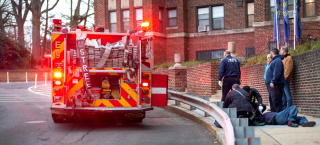
In many instances, the firefighters are first on the scene and will assess the patient and stabilize if necessary until the ambulance arrives to transport the patient to the hospital. For a truly seamless continuity of care, investments have been made in a tablet system that allows the firefighter to input all the vitals, identification, assessment, and any interventions made into a digital report which can be wirelessly transferred over to the ambulance-- who then is able to transfer that data to the hospital. The system is remarkably easy to use, and has effectively increased the quality of the care by minimizing miscommunication throughout the process.
A much sought after position is the Technician--or driver. Just about everyone wants to drive the truck, and when a position opens up there can be a fair amount of competition for the billet.
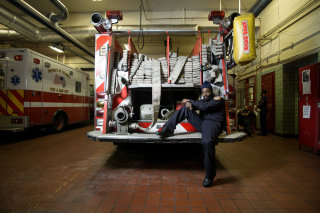
The nights are long on these 24-hour shifts. Staying busy with calls means that time goes by more quickly but staying that active and providing effort over such a long time is exhausting to say the least. For those attached to an ambulance, above all others, this rings true the loudest.
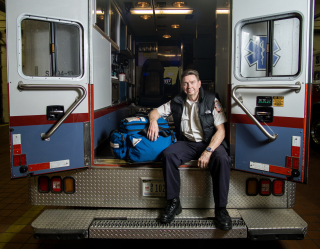
Paramedics like Larry Lantz (below) have the grueling job of answering several medical calls a day-- often having to stay with the patients for extended times to treat or transport them. They miss many meals, and are rarely in the station compared to the Engines and Trucks. Lantz has been working with DC Fire and EMS for 40 years, having served as a Gunner in the Vietnam War prior. He has many stories, and an unbelievable energy to him for someone who has been doing such demanding work for so long. There is a sense of immense pride in the work he does. With the organization making its firefighters dual-qualified as EMTs, sole-paramedics like him have been almost completely phased out.
One of the most prominent ways in which firefighters stand apart from other first responders is their undeniable camaraderie. And one of the best examples of this is when they share a meal. Most stations all pitch in for the food and cook up different meals (some are planners and some just make things up) but they all come together to prepare, cook, and eat as a single unit.
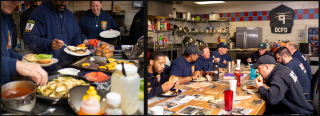
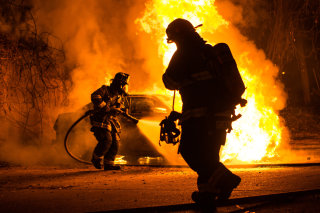
But many times plates are left uneaten or half-empty, as the call to action is neither scheduled nor convenient. And sometimes that call is the one which nearly every firefighter is waiting for: the call for fire.
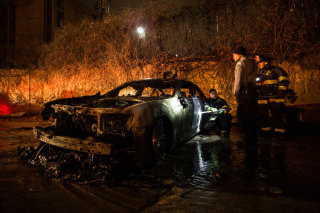
With the fire out and midnight approaching, I gathered my gear and said my goodbyes to Engine 30. I was exhausted and already dreaming of bed when suddenly I got a text from one of the firefighters that a huge fire was being handled just a few blocks from my home.
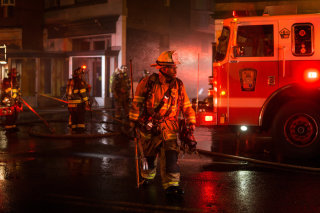
A one-story building fire had broken out and over the course of two hours it was fought and controlled-- but not without great effort from multiple Engines responding to the call. It was evident that this tight-knit team is actually a larger part of a very close community of brothers and sisters. Everyone knew everyone. And when the fire was under control, firefighters and technicians from one Engine would go talk to their buddies from another. In the rain and smoke of the late night everyone worked together without confusion, hesitation, or conflict. It isn't easy to achieve this kind of teamwork with just a few people-- let alone the dozens of firefighters on the scene.
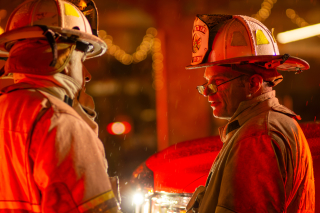
Being a firefighter is not an easy job by any means. For DC Fire and EMS it requires not just the fortitude to put yourself in harm's way when the flames are high and smoke is thick, but an aptitude in providing medical treatment to those who need it quickly, an a strong sense of not just what would be understated as teamwork-- but family.